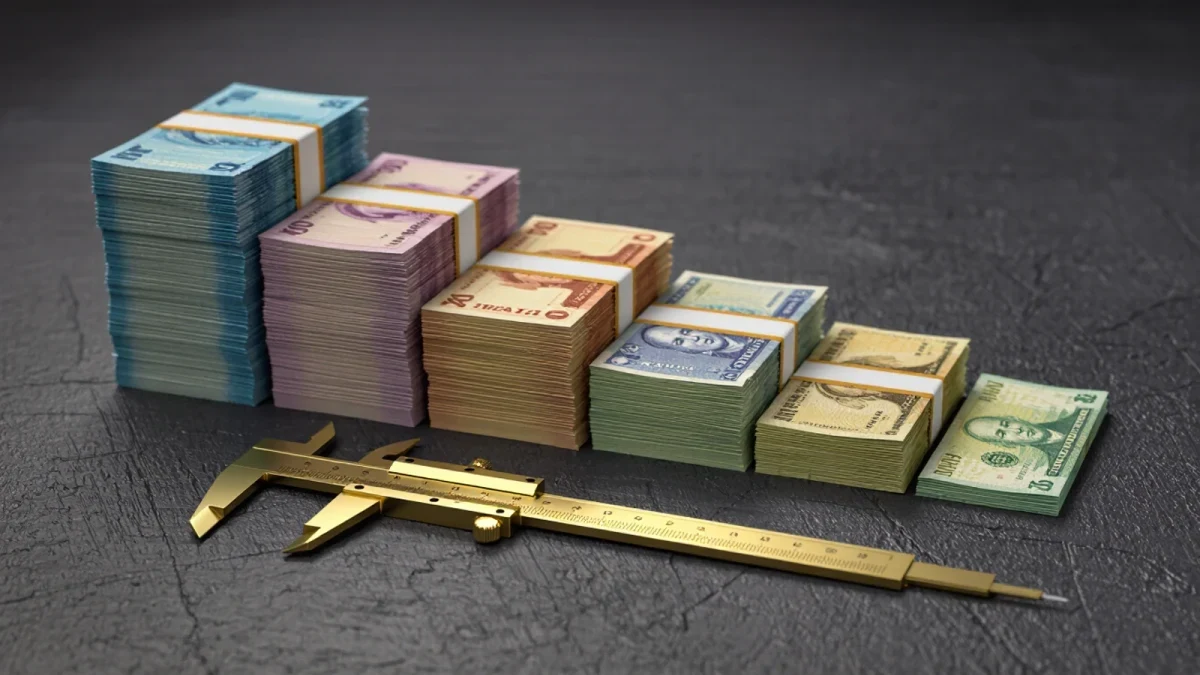
Roughly two-thirds of emerging-market debt issued internationally is denominated in U.S. dollars, per Bank for International Settlements statistics, which means every ten percent the dollar gains mechanically inflates the local-currency cost of servicing that debt by a similar magnitude. The dollar's 2022 surge and its partial retreat through 2025 ran that mechanism in both directions. Market Today publishes information, not investment advice, and this piece reads the mechanics, not the exchange rate's next move.
Why does currency matter more than interest rates here?
Because of a balance-sheet effect economists have nicknamed "original sin": governments and companies in emerging markets historically could not borrow abroad in their own currencies, so they issued in dollars and took the exchange-rate risk onto themselves. A company in Jakarta or Nairobi earning rupiah or shillings but owing dollars sees its debt burden rise one-for-one as its currency falls, regardless of what the Fed does to rates next quarter. The interest rate is the visible cost; the exchange rate is the volatile one. When the dollar index jumped above 110 in 2022, that hidden cost repriced across trillions of obligations at once.
What did the 2022 dollar surge set off?
It converted manageable debt loads into negotiation tables. Ghana defaulted in December 2022 and restructured over subsequent years; Sri Lanka's collapse the same year ended in a long restructuring completed by 2024; Zambia's multi-year restructuring concluded in 2024 as well — each case pairing dollar strength, lost hard-currency earnings, and unsustainable obligations, per IMF program documents and creditor disclosures. These were not caused by the dollar alone, and honest accounts say so: fiscal deficits and shocks were the trigger, currency moves the amplifier. The 2022 episode earned its place in debt history as the year the amplifier ran hot.
Why did the system not break more visibly?
Because emerging markets entered the cycle with better armor than in the 1990s. Foreign-exchange reserves across major emerging economies stood near ten trillion dollars in recent years, per IMF statistics; most large EMs let currencies float rather than defend pegs, absorbing shocks through prices instead of reserves; and a growing share of government debt is now issued in local currency, which shrinks the dollar-sensitive core. The Asian financial crisis generation rebuilt on exactly these three lines. The 2022–2024 defaults clustered in smaller economies where that armor was thin — a real difference, not a marketing line.
What changed when the Fed began cutting?
The pressure gauge eased in stages. The Federal Reserve lowered its policy rate from the 5.25–5.50 percent peak starting in late 2024, and by January 2026 the target range stood at 3.50–3.75 percent, per the Fed's own statements. Falling U.S. rates and a softer dollar through 2025 narrowed the gap that pushes capital out of emerging markets, and several central banks began their own cautious cuts. The relief is genuine but conditional: it depends on the dollar cooperating, which is precisely the variable no emerging-market finance minister controls. The 2025 experience — a dollar index drifting from its peak toward multi-year lows — was the benign scenario; the debt mechanics remain in place for the hostile one.
Where do the Federal Reserve's tools enter?
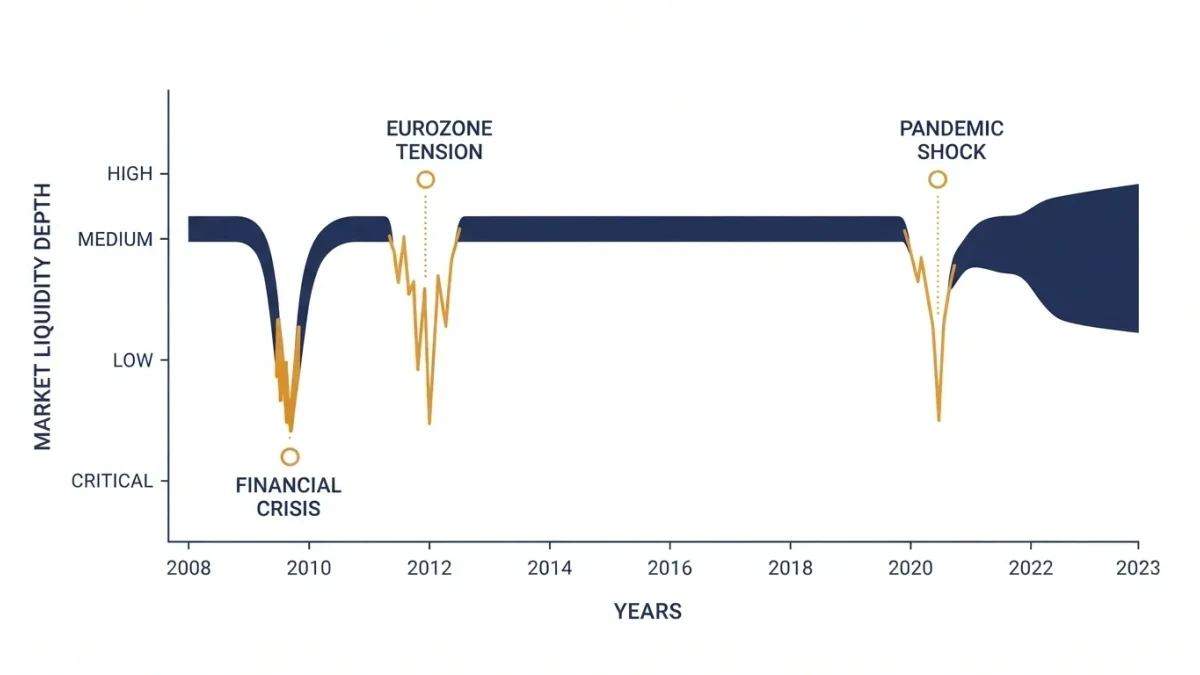
Through a little-discussed backstop created in 2020: the FIMA Repo Facility, which lets foreign central banks pledge their holdings of U.S. Treasury securities for dollar liquidity without dumping the bonds into a falling market. It was made a standing facility in 2021, per Federal Reserve announcements. In the 2022 stress it saw meaningful use by a handful of Asian central banks, dampening the sell-Treasuries-to-defend-currency spiral that marked older crises. It is plumbing, not a rescue: it supplies dollars against collateral, and it does nothing for a country whose problem is solvency rather than liquidity. Distinguishing the two is most of emerging-market debt analysis.
Usage patterns tell their own story: the facility's heaviest weeks coincided with Asia's defense of sliding currencies in 2022, then usage faded as the dollar peaked and retreated through 2023–2025, per the Fed's weekly operations data. A backstop that gets used in panic and ignored in calm is doing its job — but its existence also changes behavior in advance, since central banks that know dollars are available feel less pressure to hoard them. Infrastructure shapes incentives even when it sits idle.
What should readers watch going forward?
Three indicators carry most of the information: the dollar index, which prices the burden; the share of local-currency debt in each country's total, which sets sensitivity; and IMF program news, which signals where liquidity has already turned to solvency. The evidence of 2022 through 2025 supports neither the old panic narrative — dominoes falling at the first Fed hike — nor the complacent one — that the problem dissolved. The dollar's grip on emerging-market balance sheets loosened at the edges and holds at the core, roughly two-thirds strong by the BIS measure, and that is the number that will matter the next time the index moves.
Where can readers verify the underlying data?
The Federal Reserve publishes the FIMA facility's terms and usage on its site, the IMF publishes reserve statistics and program documents, and the BIS compiles the currency composition of international debt. Primary sources for every claim above are public and free.
One caution belongs in any reading list: currency-debt statistics get revised, and country coverage shifts as issuers change reporting. A thesis built on the direction of these numbers has survived revisions; one built on the second decimal has not.