
Private credit entered 2026 with somewhere near two trillion dollars in global assets by common industry estimates, and with its first genuinely public stress test behind it: the 2025 failures of two sizable borrowers that put lender marks, leverage, and retail exposure on the front page. Market Today publishes information, not investment advice, and the claims below follow filings and rating-agency reports, not promotional arithmetic.
What happened in the 2025 stress test?
Two credit-heavy companies — an auto lender and a consumer-products group — collapsed into bankruptcy within weeks of each other in the autumn of 2025, per court filings, together wiping out or impairing several billion dollars of debt. What made the episodes unusual was the holder base: the loans sat inside private credit funds, some of which had marked similar exposures near par shortly before the defaults, per fund disclosures. Rating agencies and fund auditors opened reviews; redemptions in the semi-liquid vehicles did not spiral. The sector took its wounds privately, which is both its design and its vulnerability.
Why do private marks matter so much here?
Because private credit's headline stability rests on valuation practice. Unlike syndicated loans, which trade daily, direct-lending positions are valued quarterly by managers or third-party valuers, and the 2025 defaults showed marks trailing reality by months. Business development companies — the publicly traded wrappers — traded at double-digit discounts to stated net asset value through much of 2025, per market pricing, which is the market saying out loud that it discounts the marks. A discount is not proof of misvaluation; it is evidence that buyers refuse to pay par for opacity.
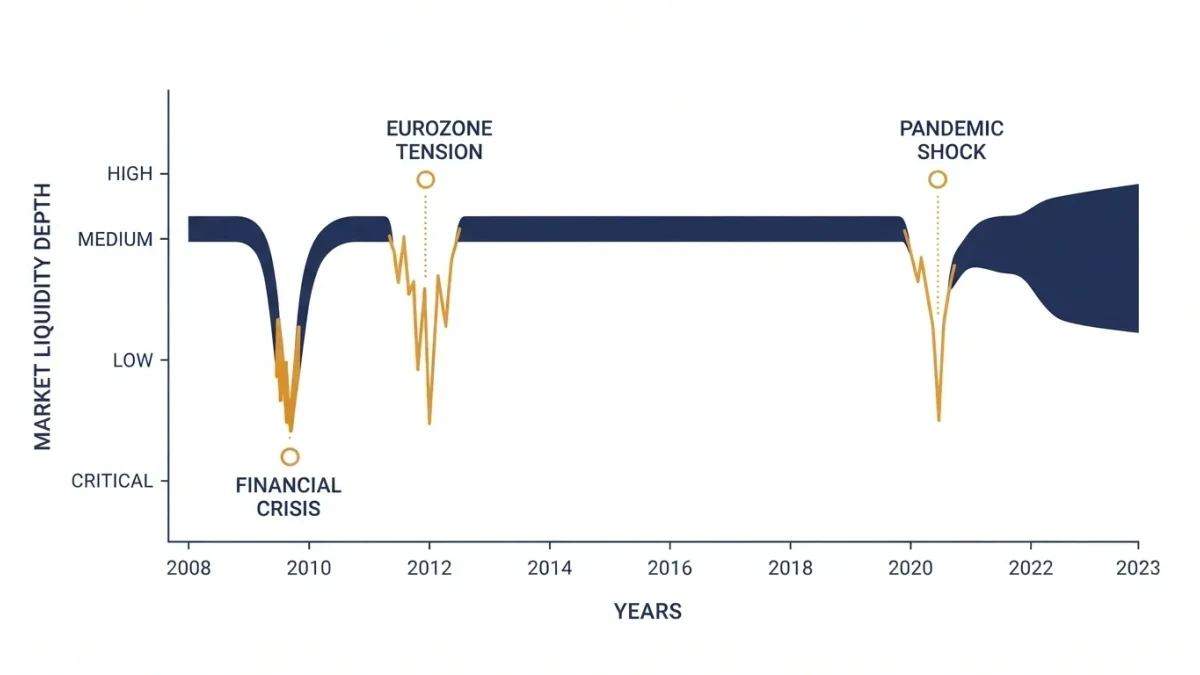
The mechanics compound quietly. Semi-liquid vehicles promise monthly or quarterly windows on assets that need months to sell; subscription lines of credit let funds send cash before assets settle, which smooths distributions and enlarges total leverage at the system level. Each device is individually defensible. Together they mean that a run, if one ever came, would arrive through redemption queues and bank credit lines rather than ticker tapes — slower to start, and slower to see.
How big is the sector, honestly?
Estimates cluster around 1.5 to 2 trillion dollars globally as of the mid-2020s, with forecasts of continued growth toward 2.5 trillion or beyond by decade's end — figures that depend heavily on definition, since some counts include venture debt, infrastructure credit, and distressed funds while others count only corporate direct lending. The estimate-label matters: unlike mutual fund assets, no single regulator publishes a definitive tally, and the industry's own trackers are the primary source. That measurement problem is itself a supervisory concern, not a footnote.
Why are regulators paying attention?
Because the sector's perimeter has moved. Private credit began as financing for mid-sized companies bought by private equity, funded by institutional investors who could lock up money for a decade. It now touches retail savers through semi-liquid interval funds and perpetual vehicles, and it touches banks and insurers through funding agreements, subscription lines, and risk-transfer deals. The SEC's 2025 examination priorities flagged valuation practices in private funds explicitly, and multiple congressional letters during 2024 and 2025 pressed for disclosure of bank–fund interconnections. Supervisors are not alleging wrongdoing; they are mapping contagion channels that did not exist when the asset class was small.
What is the bull case after the test?
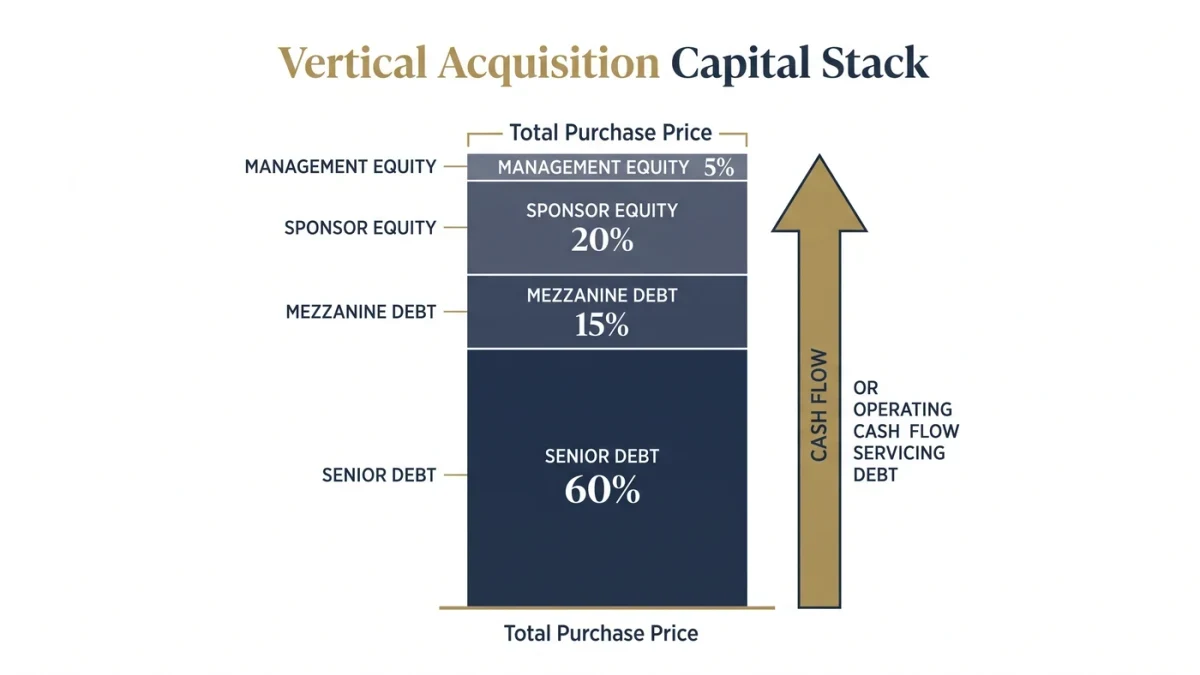
It survived. Default rates in senior direct lending remained low through 2025 by the standards of leveraged finance — industry trackers generally reported them in the low single digits — because these loans sit at the top of the capital structure, carry floating rates that eased as the Fed cut, and include maintenance covenants that give lenders leverage to renegotiate early. In the 2025 failures, many funds restructured or sold positions rather than realizing total losses, and no fund gated. By the sector's own argument, that is what a well-structured private market does: absorb stress away from daily price discovery. The argument has real support in the filings.
What is the bear case after the test?
The stress was mild and the marks still lagged. Two borrowers — not a recession — produced quarters of stale valuations, lawsuits over collateral, and public disagreements about recovery values. A genuine downturn would test the same machinery at a hundred times the scale, with retail vehicles that promise quarterly liquidity holding assets that take quarters to sell, and with banks and insurers quietly on the other side of funding lines whose size regulators themselves struggle to measure. The bear case does not predict collapse; it notes that the sector's most important number — the mark — is produced by the people who are paid based on it.
How does private credit compare with syndicated lending?
The two markets finance similar companies under different plumbing, and the differences explain why the same economy can produce different loss reports from each channel.
| Feature | Syndicated loans | Private credit |
|---|---|---|
| Valuation | Daily market quotes | Quarterly manager marks |
| Typical covenant | Often covenant-lite | Maintenance covenants common |
| Holder base | Banks, CLOs, funds | Direct-lending funds, BDCs |
| Rate type | Floating | Floating |
| Transparency | Public filings, prices | Private; BDC schedules public |
The table is the debate in miniature: private credit trades transparency for control, and every argument about the sector — resilience, stale marks, contagion — follows from those two columns.
Where can readers see the primary documents?
More is public than the label suggests. Business development companies file with the SEC, their schedules of investments are on EDGAR, and bankruptcy dockets disclose the 2025 credit disputes in detail. The claims above are checkable there — which is the standard any analysis of this sector should meet.