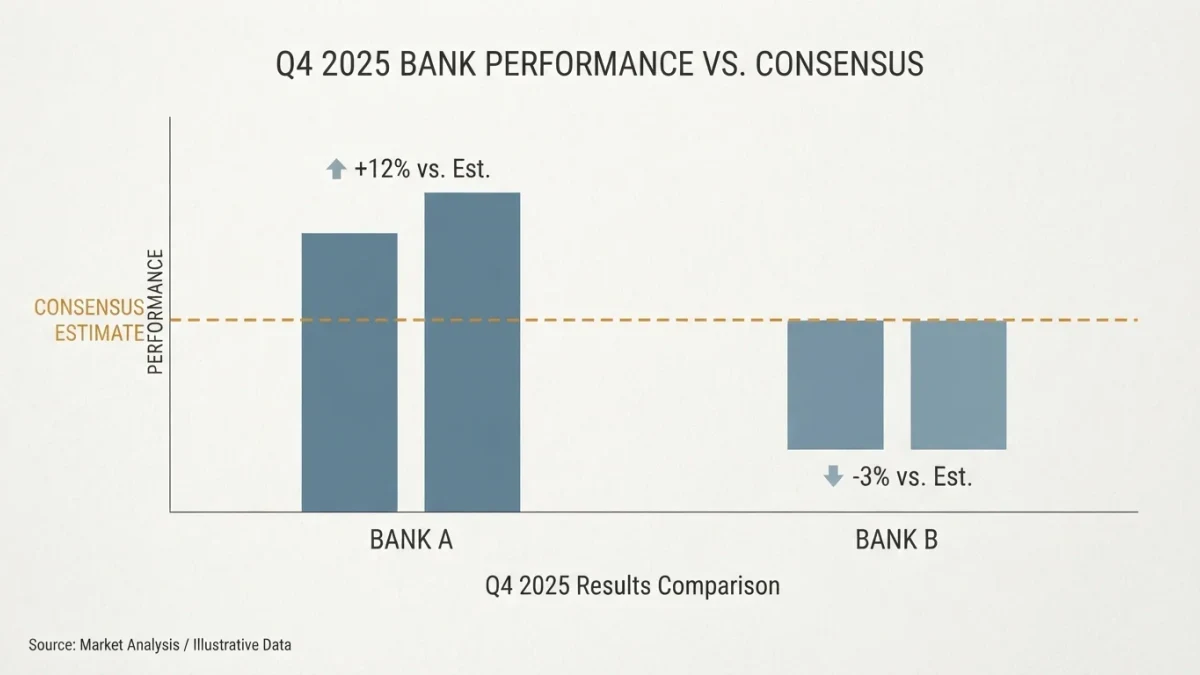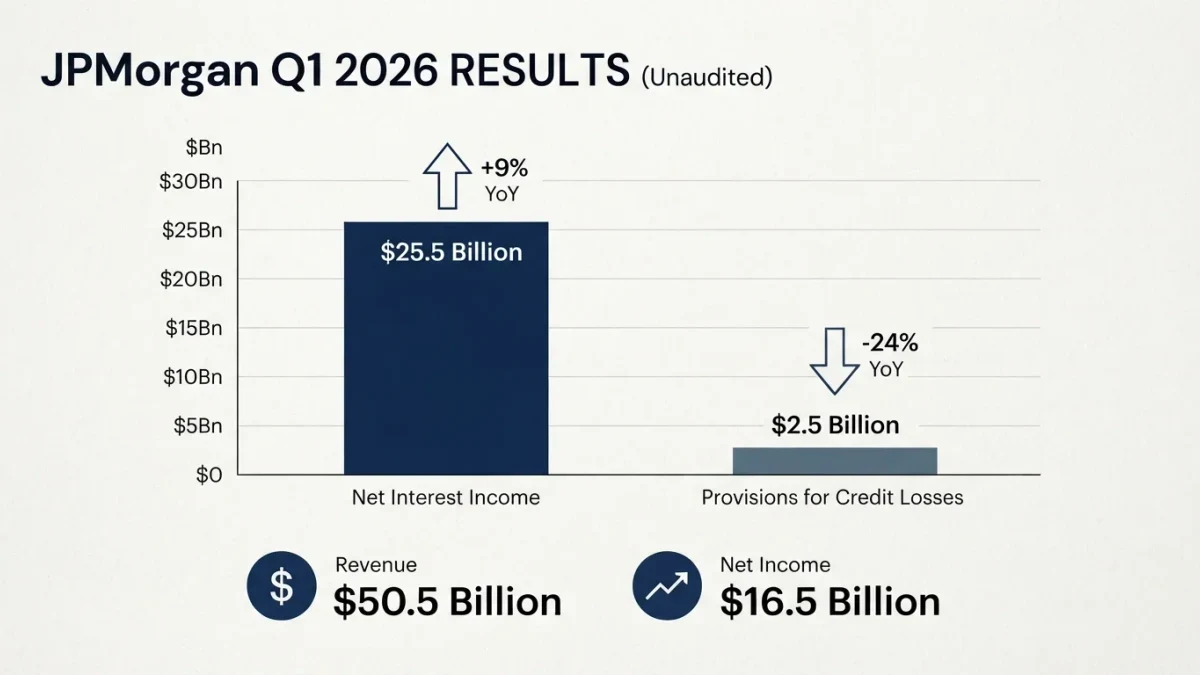

JPMorgan Chase opened the fourth-quarter earnings season on January 13, 2026 with adjusted earnings of 5.23 dollars per share against roughly 5.00 expected and revenue of 46.77 billion dollars against 46.2 billion forecast, per the company's release and consensus tallies — a clean beat on both lines from the nation's largest bank.
What did the report show?
A quarter that beat the Street's bar with room to spare. The adjusted per-share figure exceeded consensus by about four percent, and revenue topped expectations by over half a billion dollars, per the release and analyst tallies — the company's payments franchise separately reported record quarterly revenue of 5.1 billion dollars, up 9 percent year over year, per its business-line disclosures. Results landed at 6:45 a.m. Eastern with the call at 8:30, the standard ritual that now opens every earnings season: banks first, because their calendars run ahead of the broader market's.
Why do banks always report first?
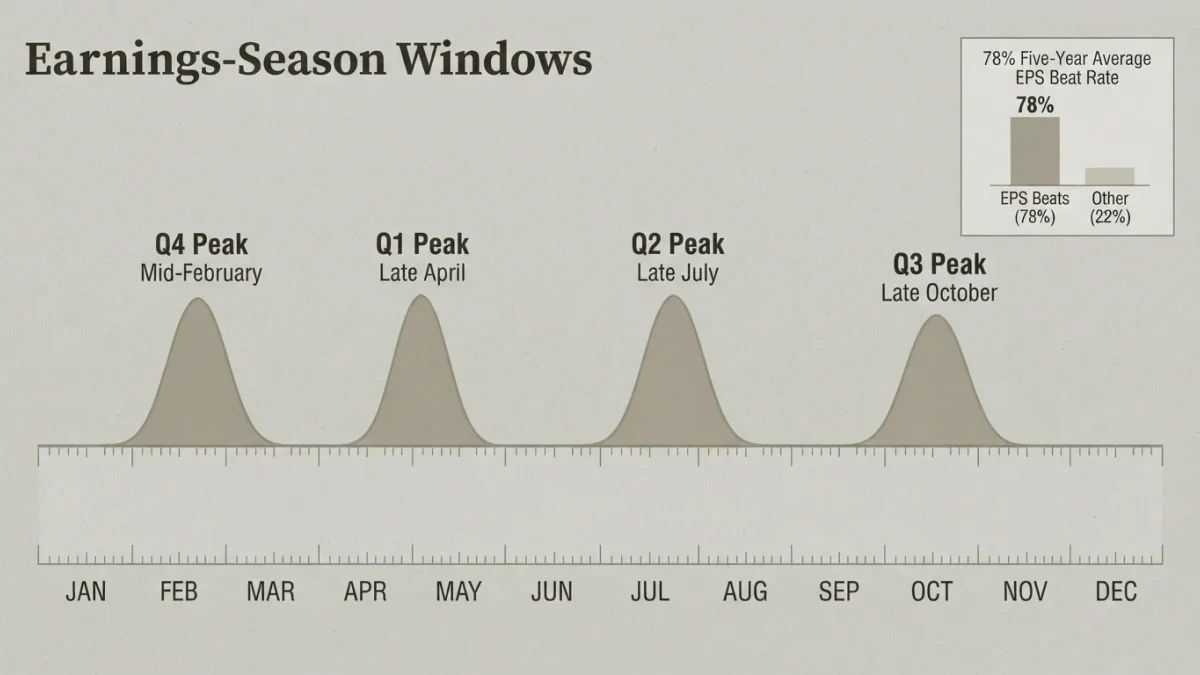
Calendar structure, with an information dividend. Large banks close their books on the calendar year and file on a schedule that puts their fourth-quarter reports in mid-January, weeks before most industrials and technology companies — so the season's first hard numbers come from the institutions that sit at the center of the economy's cash flows. Their results carry signal beyond their own shareholders: net interest income reads the interest-rate environment directly, credit costs and reserve builds read the household and corporate balance sheets, trading and advisory revenues read market activity, and management's outlook language reads the year ahead. When the biggest bank beats, the season's first data point supports the earnings-cycle thesis; when it misses, every subsequent report gets read more skeptically.
What context did the coverage skip?
Two threads deserve more attention. First, the adjusted-earnings framing itself: the headline number excludes items the bank identifies — this publication's analysis of GAAP-versus-adjusted earnings covers why the gap deserves a reader's attention, and the release's reconciliation tables are the document to consult. Second, the credit line: with policy rates at 3.50 to 3.75 percent after two years of cuts, the comparison questions that matter are how provision expenses trend against prior quarters and what charge-off data says about consumers — the beat on revenue says less about the cycle than the trend in credit costs does, and those tables sit in the same release.
What happens next, factually?
The rest of the large banks reported through the same week on their published schedules, and the season widens from here across sectors through February. The primary documents — JPMorgan's release, presentation, and the eventual 10-K — are on its investor-relations site and the SEC's EDGAR system. Readers verifying this account should read the release directly, including the reconciliation from adjusted to reported figures; the tables are the story's substance, and they are public.