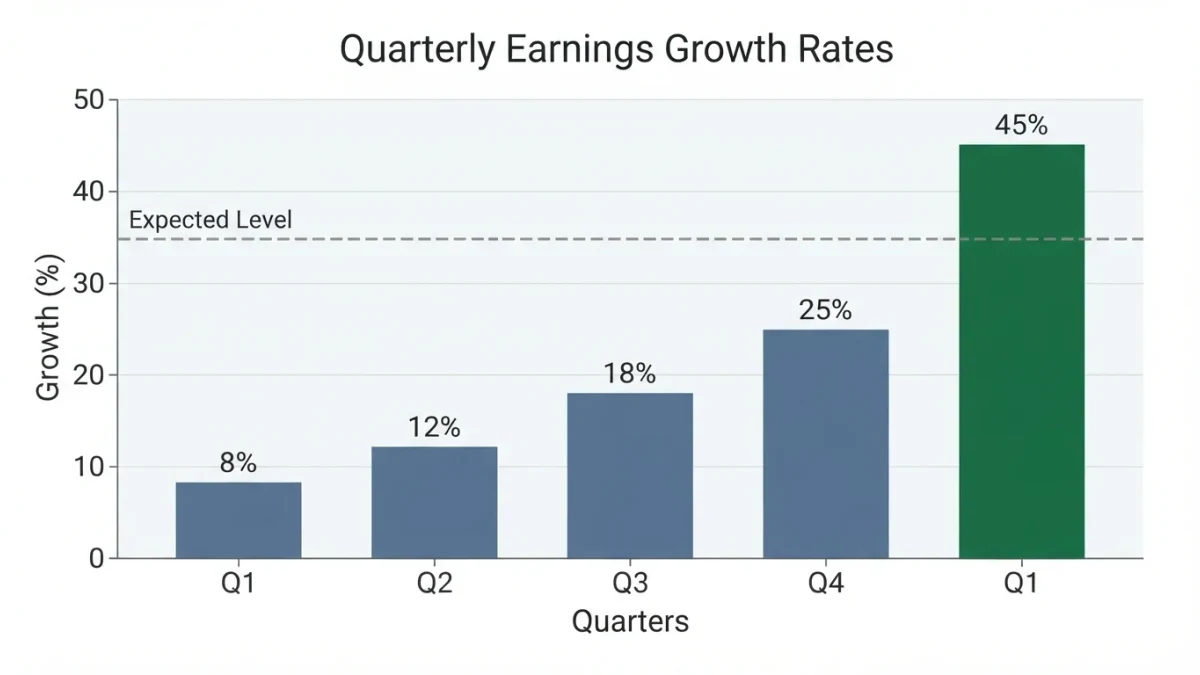
First-quarter 2026 earnings for the S&P 500 grew 28.6 percent year over year with 97 percent of companies reported, per earnings tally data — the strongest quarter since late 2021 and roughly double the approximately 12.6 percent growth markets expected entering the season. It was the sixth consecutive quarter of double-digit earnings growth.
What did the season actually deliver?
An acceleration, not a continuation. The four prior quarters had each posted growth in the low-to-mid teens; the first quarter of 2026 nearly tripled that pace at the index level, per the published tallies, with profit margins widening through the season — a detail analysts highlighted as evidence the strength was broad-based rather than purely revenue-driven. The index had pushed to fresh highs above 7,100 during the quarter itself, meaning the reported results landed on a market that had already begun pricing better fundamentals — and the beats validated that pricing rather than escaping it. The mechanics of that validation deserve a sentence more: when results confirm a rally's thesis, the estimate revisions arrive on top of prices that already moved, which is why strong seasons can coincide with quieter post-season tape — the surprise was consumed in real time.
Why does the beat-versus-expectations gap matter?
Because seasons are graded against the bar, not against zero. Entering the quarter, consensus looked for roughly 12.6 percent growth — a deceleration story consistent with a maturing cycle — and the delivered number ran some sixteen points above it. Beats of that scale force estimate revisions across thousands of analyst models, and revisions, more than the prints themselves, are what propagate into price targets and valuations in the weeks after a season closes. The first quarter's afterlife is exactly that revision arithmetic still working through the market's expectations for the rest of 2026.
What context did the coverage skip?
Two threads deserve attention. First, the base effect: late-2021 comparisons flatter no one — the strongest-since-then framing measures this quarter against a market about to enter an earnings recession, and a portion of the 28.6 percent is the base whispering as loudly as the growth is shouting. Second, concentration: as this publication has documented, index-level earnings are increasingly dominated by a handful of mega-caps, and a top-line index growth figure can describe a handful of companies' acceleration more than five hundred businesses' health. The sector-level breakdown in the earnings- tally publications is where the number's breadth can be checked, and honest readers check it.
What happens next, factually?
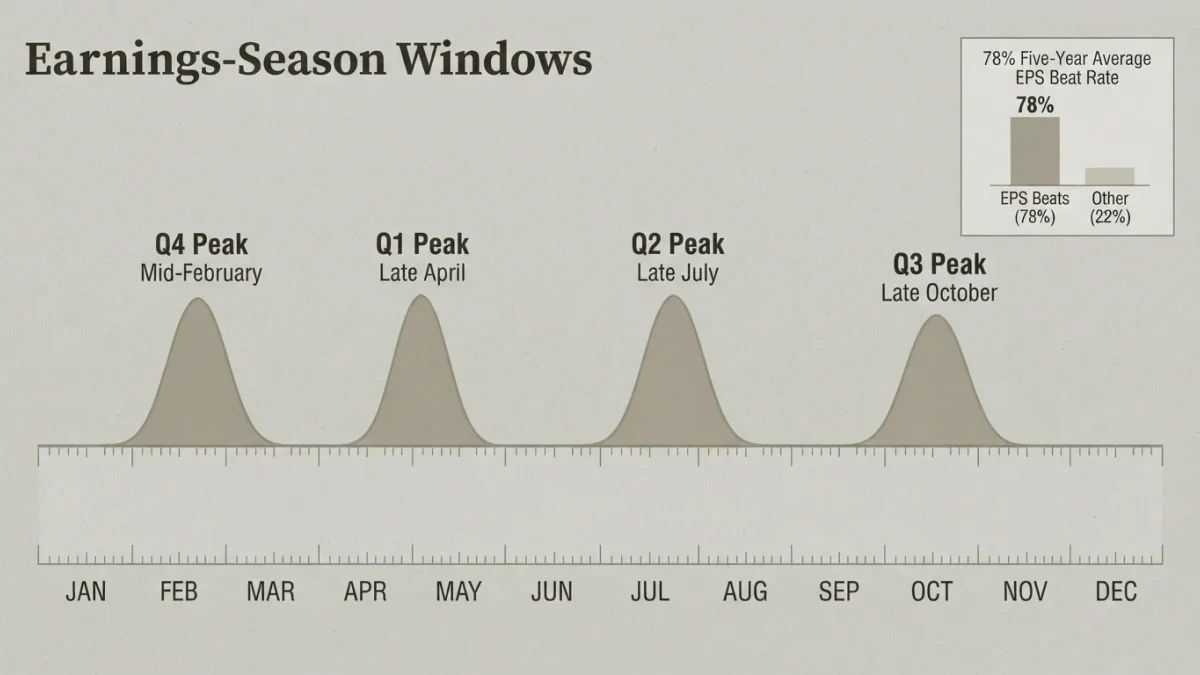
The second-quarter season opens with the banks in mid-July on their standard calendar. The estimate-revision consequences of this season continue to publish through the data services, and the full first-quarter record — including the late reporters — is complete in the tally services' archives. Readers verifying this account should consult the published earnings trackers directly; the numbers above are theirs, quoted.