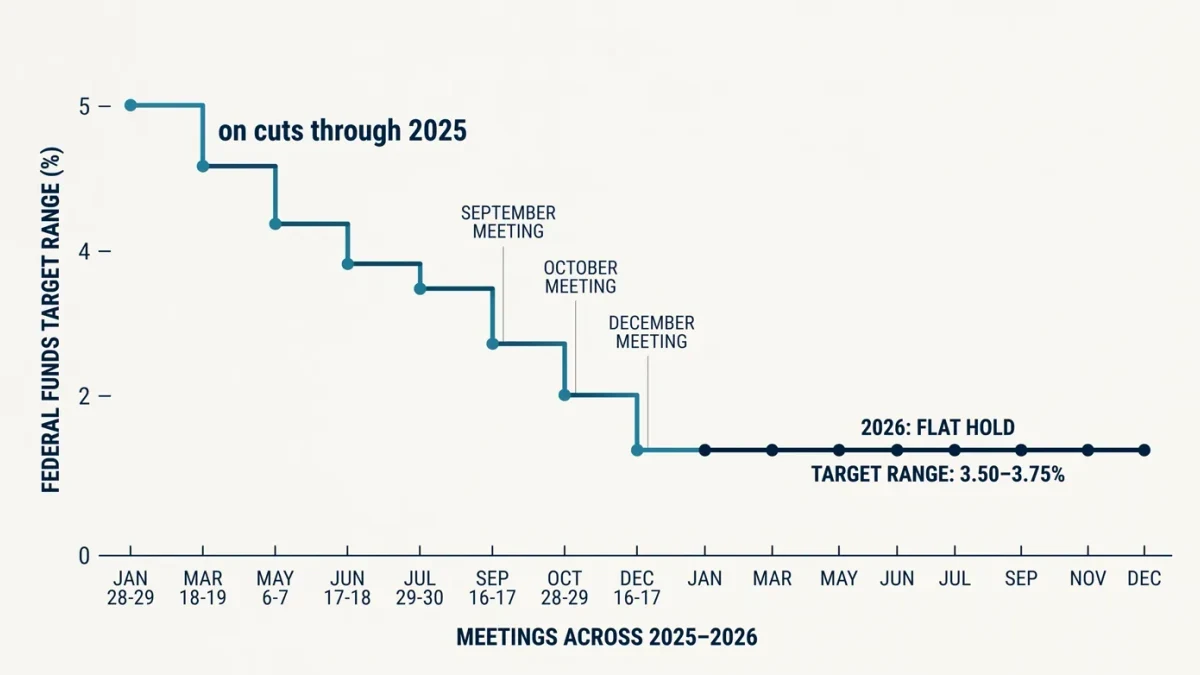
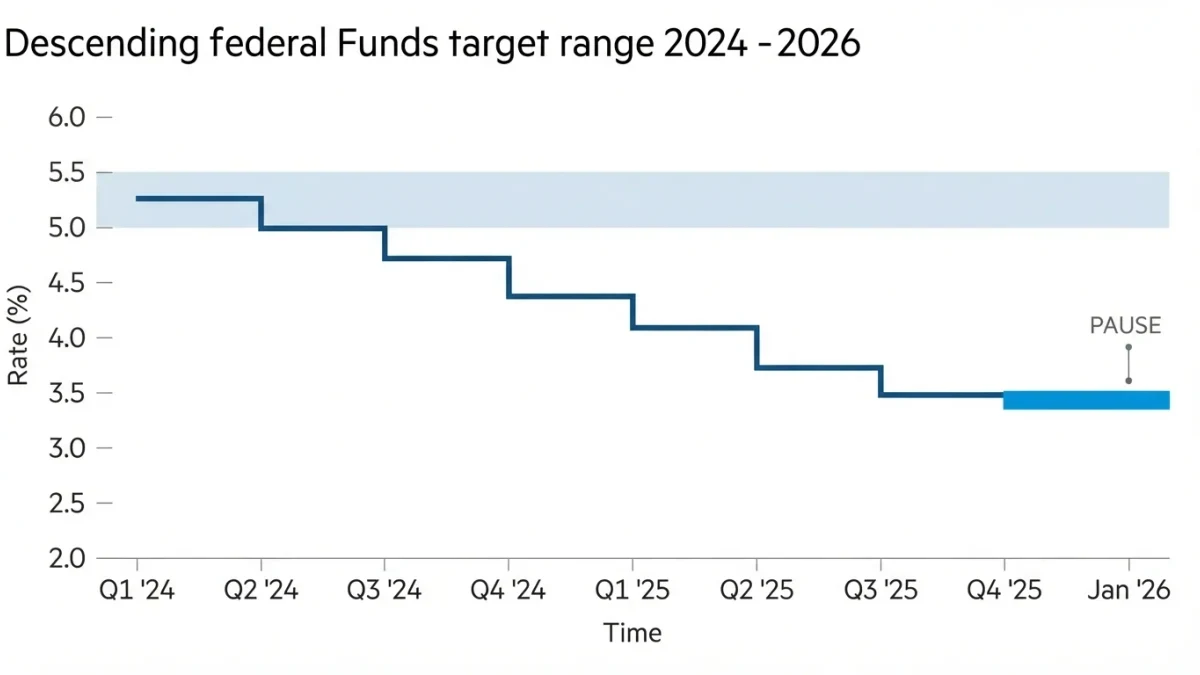
The Federal Reserve left the federal funds target range at 3.50 to 3.75 percent following its January 27–28, 2026 meeting, per the Federal Reserve's statement — a pause in the cutting cycle that had brought rates down from the 5.25–5.50 percent peak set in 2023. The decision is the system-level event of the month for markets, because the policy rate anchors every other dollar rate in the economy.
What did the Fed actually decide?
The Federal Open Market Committee voted to maintain the target range, ending a run of reductions that began in late 2024 and continued through 2025. The statement's framing, as widely reported, emphasized that inflation pressures persisted above levels consistent with the committee's 2 percent objective — the justification for standing still rather than continuing to ease. Market commentary around the decision, including bank and broker analyses published January 28, noted expectations that roughly one cut remains possible later in 2026, though none was signaled for the immediate meetings. Dissents and the vote count appear in the official minutes when published; the statement itself is the operative document.
Why does a pause matter beyond the statement?
Because the level of the policy rate transmits through the entire rate complex — mortgage pricing, corporate borrowing, the dollar, and the valuation framework for equities. A pause at 3.50–3.75 percent tells markets the Fed believes policy is closer to neutral than to stimulus, and the burden of proof shifts to incoming data to justify further movement in either direction. The practical consequence is volatility clustering around data releases: with the Fed on hold, each inflation and employment print carries more of the market's rate expectations than it would if the Fed were moving steadily.
What context did other coverage skip?
Two items deserve more attention than they received. First, the sequencing risk: holding at 3.50–3.75 percent while inflation sits above target means the Fed is deliberately waiting — and waiting is itself a policy stance with costs and benefits that depend on which data breaks first. Second, the financial-plumbing angle: the Fed's January operations and its standing facilities continue adapting to a larger balance-sheet and reserves environment, which affects short-term funding markets regardless of what the statement says. Rate decisions are the headline; the plumbing beneath them sets how the decision actually reaches the banking system.
What happens next, factually?
The committee's published calendar shows subsequent meetings through mid-2026; minutes of this meeting follow within weeks, and the Chair's press conference transcript is on the Federal Reserve's site. Readers verifying this account should read the January 28 statement directly — it is the primary source for the range, the rationale, and the vote.