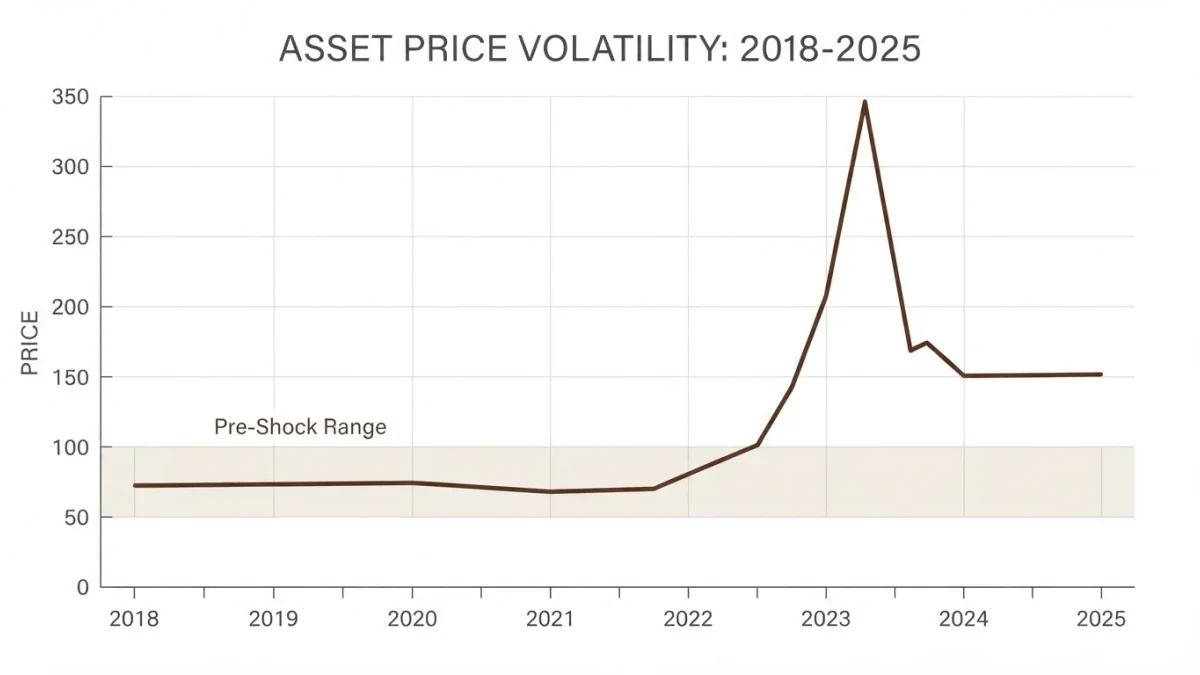
Lumber futures rose from roughly four hundred dollars per thousand board feet in early 2020 to a record above seventeen hundred in May 2021, then collapsed by nearly three quarters within four months, per exchange price records — one of the wildest commodity round trips in modern markets. The driver was not forestry; it was housing.
What is the lumber futures contract?
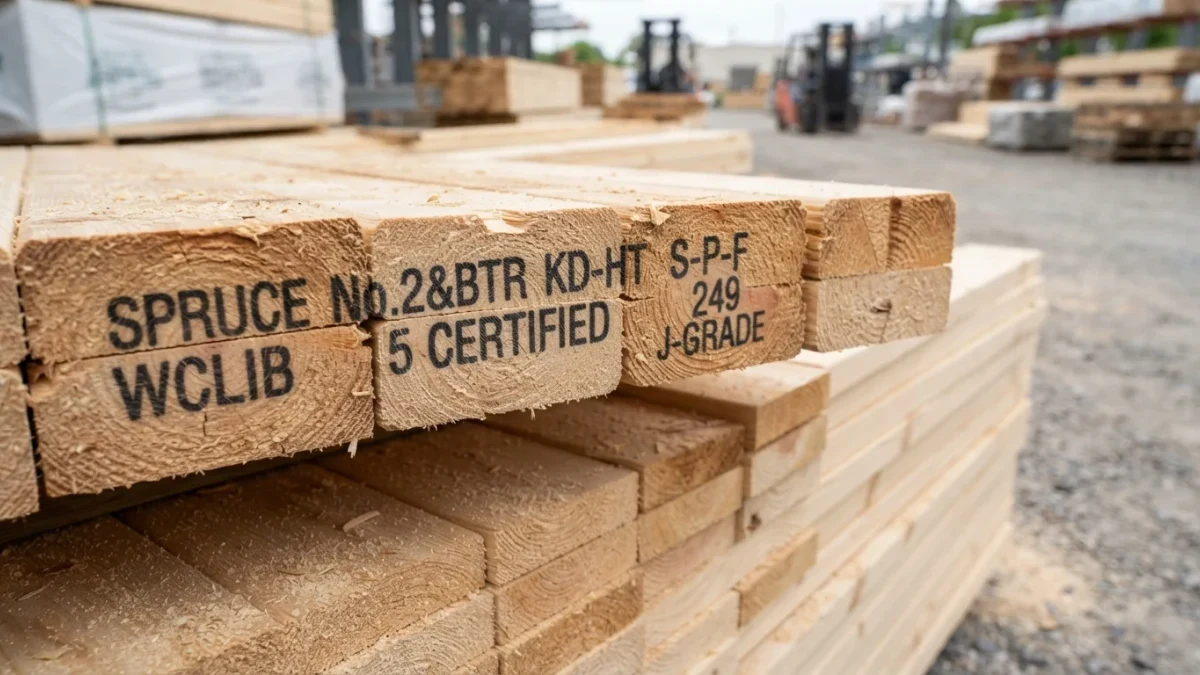
The benchmark is the randomly cut softwood lumber futures contract traded on the Chicago Mercantile Exchange, priced per thousand board feet, with physical delivery against established mill specifications. It prices North American softwood framing lumber — spruce, pine, fir — the dimensional two-by-fours and sheet goods from which American houses are framed. The cash market is layered: mills sell to distributors and treating yards; national and regional retailers buy truckload lots; and futures reference a specific deliverable grade that trades at spreads to actual regional products. For thirty years the contract's price lived between roughly two and five hundred dollars; the 2020s blew that band apart, and the contract now spends its life between roughly three hundred and six hundred with excursions, per exchange data — the range itself a fact about the era.
Why is housing the demand engine?
Because wood framing is how North America builds. Roughly ninety percent of new single-family American homes use wood framing, per U.S. Census construction data, and a new single-family home embodies tens of thousands of board feet of lumber. Two demand streams flow from that fact: new construction, which follows starts and permits — the Census Bureau's monthly releases — and repair and remodeling, which economy-wide runs to roughly half of lumber demand, driven by the age of the housing stock and by household balance sheets. Both streams respond to mortgage rates: affordability gates new construction immediately, and renovation follows home equity and confidence with a lag. The link is so tight that lumber quotes are, functionally, a leveraged reading on housing activity expectations.
What actually happened in 2020 and 2021?
A textbook demand shock against inelastic supply, amplified by logistics. Pandemic interest rates cut mortgage costs to record lows; lockdowns redirected spending toward homes; and do-it-yourself renovation boomed alongside a surprising surge in relocations. Mill capacity, curtailed early in the pandemic, could not respond quickly — sawmills are capital projects with years of lead time — and rail and truck capacity was scarce. Prices at the consumer level ran multiples above futures, and builders reported framing-package costs doubling, per earnings calls that year. The May 2021 peak above seventeen hundred then unwound as demand normalized and capacity returned, with futures falling below six hundred by late summer — a round trip that bankrupted speculators in both directions and permanently changed how the trade treats the contract's seasonality.
Why is supply so slow to respond?
Because sawmills and forests answer in years. A new sawmill is a multi-year, hundred-million-dollar project, and mill operators scarred by the 2008 housing bust had spent a decade closing capacity, not building it — North American capacity entering 2020 was well below 2007 levels, per industry statistics. The log supply has its own constraints: Canadian boreal supply, historically the marginal source for the U.S. market, has shrunk structurally as British Columbia's mountain-pine-beetle kill and wildfire damage reduced harvestable timber, per provincial data. Forestry economics are patient in both directions: trees grow on decade clocks, and no price spike makes mature timber out of saplings.
What role do trade duties play?
A standing wedge in the continent's market. Since 2017, U.S. anti-dumping and countervailing duties have applied to Canadian softwood imports — the latest chapter of a trade dispute running since the 1980s — and in 2025 the Commerce Department set combined duty rates near thirty-four percent, sharply higher than the prior roughly fourteen, per official determinations. Duties at that scale reprice the roughly quarter to third of American softwood consumption that imports supply, and lumber futures — which price U.S. delivery — rallied on the 2025 announcement while Canadian producers absorbed margin hits. Trade policy has become a structural component of the lumber price, which is why mill-gate economics in British Columbia and tariff dockets in Washington both belong in the same analysis.
How do mortgage rates reach lumber prices?
Through housing starts, with a lag measured in months. When thirty-year mortgage rates rise quickly, affordability collapses, purchase applications fall, and builders first slow sales expectations, then cut starts — Census data shows the sequence clearly in every cycle since the 1980s. Lumber demand follows starts with an additional lag, because framing packages are bought at each project's start. Falling rates run the sequence in reverse. The 2022–2023 period demonstrated the elasticity: rates near eight percent cut housing starts to multi-year lows, and lumber spent the period in the low hundreds of dollars per thousand board feet at the troughs, per exchange data — a housing recession expressed in a commodity quote.
How does the futures curve carry housing expectations?
The strip of monthly lumber futures quotes the market's calendar: near months price current yard demand, deferred months price expectations for next spring's building season, and the shape between them — contango or backwardation — states whether the market expects scarcity to ease or tighten. During the 2021 spike the curve inverted sharply, near months at desperate premiums over deferred, telling anyone who looked that the market itself treated the squeeze as temporary; the unwind proved the curve right. In housing recessions the pattern flips, with deferred months carrying premiums as traders position for eventual recovery. The curve is the contract's most honest sentence — it quotes the market's own forecast, which is subject to the same weather and sentiment as everything else.
Who trades lumber and how should a reader follow it?
Producer hedgers selling forward, builders and distributors buying protection, and a sizeable speculator community that gives the contract its volatility — lumber futures are thinly traded relative to energy or metals, which is precisely why they gap. A reader following the market needs four inputs, all public: the Census Bureau's monthly housing starts and permits releases; weekly mortgage-rate surveys; the futures curve on the exchange; and the trade-policy docket for Canadian duties. Housing starts tell you demand's direction, mortgage rates its next leg, the curve the market's own expectations, and the docket the policy wedge. Together they explain most of lumber's moves — and expose the rest as sentiment, which in this contract is never a small residual.
What is the disciplined takeaway?
Lumber is a concentrated bet on American housing formation, delivered through a thin contract with structural trade frictions. Its 2021 mania and bust taught the same lesson every commodity cycle teaches at higher volume: inelastic supply plus surging demand produces prices that look like a new era until capacity and substitution answer, and the answer arrives faster than the narrative adjusts. For readers, lumber is best used as a thermometer — the fastest liquid reading on housing-cycle expectations available — rather than as a forecast of anything. Thermometers measure; they do not prophesy.
It is also a market where the physical tells the truth before the screen does. Yard inventories, order files at mills, and delivery lead times circulate through the trade's own channels and reach the futures price with a lag; when futures run ahead of physical reality, basis — the gap between cash and futures — widens, and mean reversion usually follows through the basis rather than the outright quote. Readers with no access to trade channels can proxy this with the exchange's cash-settled references and regional price assessments, which together keep the futures honest.
Where can readers check the numbers?
Housing starts and permits publish monthly from the Census Bureau, mortgage rates weekly, futures daily from the exchange, and softwood duty determinations from the Commerce Department's International Trade Administration records. Every figure above traces to those free public sources, and the series are short enough that a spreadsheet-literate reader can assemble the whole relationship in an afternoon.