Commodities trading is the buying and selling of contracts tied to raw materials — crude oil, gold, wheat, copper, coffee — rather than shares of companies. Most of that trading happens in futures markets, where neither side ever touches a barrel or a bushel. The honest starting point for a beginner is that these are professional hedging markets first and speculation venues second, and the price swings that make headlines are the reason both groups show up.
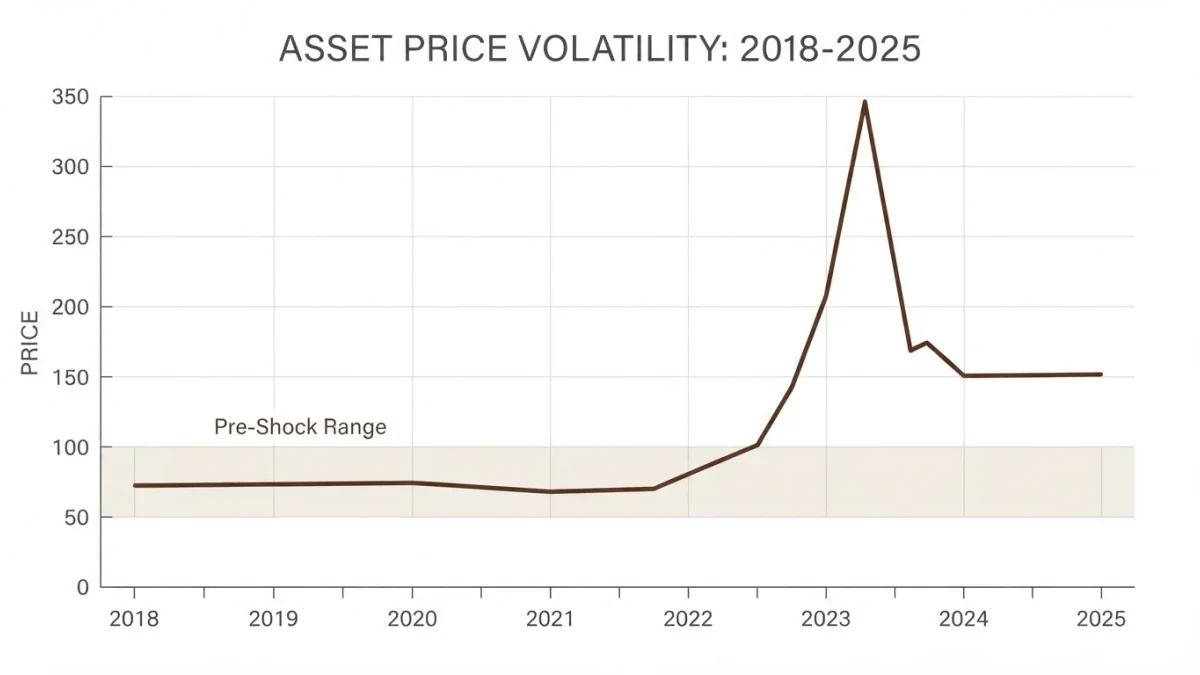
The scale of the swings is not subtle. On a recent snapshot, Trading Economics showed Brent crude down more than 4 percent year to date while up nearly 69 percent year over year, and heating oil up more than 125 percent over the same year-over-year span. Those are ordinary listings on an ordinary day's board, not crisis readings. A market that can move double digits in a year — in either direction — rewards caution before it rewards conviction.
This explainer walks through what a commodity contract actually is, how leverage changes the arithmetic, who really trades these markets, and why the practical advice for most newcomers is to learn the mechanics before risking money in them.
What exactly is being traded in a commodity market?
Nobody at a futures exchange is swapping physical copper. What changes hands is a standardized contract: an agreement to buy or sell a set quantity of a commodity at a set price on a set date. The exchange sets the contract's size, quality and expiry so every participant is trading an identical instrument. That standardization is what makes the market liquid — a buyer knows precisely what a contract represents without inspecting anything.
Two broad contract types matter. A futures contract obliges the holder to settle at expiry, either by physical delivery or a cash payment. An options contract buys the right, but not the obligation, to take a futures position later. Producers and consumers use both to lock in prices; speculators use both to bet on direction. The futures boards tracked by CNBC give a sense of the breadth — energy, metals, agriculture, livestock and currency contracts all trade side by side.
There is also a spot market, where a commodity changes hands for immediate delivery, and it does not always agree with the futures price. The gap between them carries real information about supply tightness, which is why the spot quote alone can mislead — a point our look at why the spot price doesn't tell the whole oil story examines in detail.
How does leverage make commodity trading different from buying a stock?
When you buy a share, you pay the full price. In a futures market, you post only a fraction — the margin — and control the full contract value. That is leverage, and it cuts both ways with unusual sharpness. A small price move produces a large percentage gain or loss on the money you posted, and if the position moves against you, the exchange or broker can demand more margin on short notice. Refuse, and the position is closed at whatever the market offers.
Run a simple example. Suppose a contract controls a position worth $50,000 and the required margin is $5,000. A 10 percent adverse move in the underlying price is a $5,000 loss — the entire posted margin, from a move the headline price would call modest. The same 10 percent move against an unleveraged stock buyer costs 10 percent of the money at risk. That asymmetry is the single most important fact about commodity trading for a newcomer, and it is why the risk language on trading platforms is not boilerplate. Investing.com states it plainly in its own risk disclosure: trading on margin increases financial risk, losses can exceed what a trader expects, and the activity may not be suitable for all investors.
Leverage also explains the speed. Because margin calls force decisions within hours or minutes, leveraged traders cannot simply wait out a bad quarter the way a stockholder can. The market's structure, not just its volatility, punishes hesitation differently than equity investing does.
Who actually trades commodities — and who sets the tone?
The market has three main camps. Hedgers — airlines locking in fuel costs, farmers locking in crop prices, miners locking in metal prices — use futures to remove price risk from their businesses. Speculators take the other side, supplying liquidity and accepting risk in exchange for a chance at profit. Arbitrageurs police the gaps between related contracts and markets, closing mispricings that appear for minutes at a time. We covered a connected angle in Freight Rates and Commodities: What Shipping Costs Signal Before Prices Move.
The hedgers are the reason the market exists; the speculators are the reason it is easy to trade in. A beginner entering this arena is competing against participants whose livelihoods depend on reading supply data, freight costs and inventory reports daily. Our coverage of who actually moves a barrel of oil sketches that professional chain. It is a market where the informational playing field is visibly tilted. For related coverage, see Who Actually Moves a Barrel of Oil? Brokers in the Commodity Chain.
That tilt shows up in how prices react to scheduled data. A weekly government inventory report can move crude prices sharply in minutes — the mechanics are laid out in how the EIA's weekly oil report moves crude prices. A trader who does not know the data calendar is trading blind on the days the market moves most.
What do the price boards actually tell a beginner to watch?
Commodity markets divide into broad families, each with its own demand drivers. Energy — crude, natural gas, gasoline, heating oil — responds to weather, inventories and production decisions. Metals split into precious metals, where gold's relationship with interest rates dominates, and industrial metals, where construction and manufacturing demand rule. Agriculture runs on growing seasons, weather and government crop reports. Livestock completes the board.
A current snapshot shows how differently these families behave at the same moment. Per Markets Insider's commodity price board, gold sat at $4,184.31 per troy ounce, WTI crude at $90.30 per barrel, copper at $14,526 per ton and cocoa at £4,233 per ton — with daily moves ranging from a 5.46 percent jump in cotton to a 3.26 percent drop in sugar. Same day, same market, wildly different behavior. Any single rule about "how commodities trade" fails the moment it meets the full board.
Two structural patterns are worth learning early. First, seasonal cycles are real and different in each family — natural gas is the classic case, examined in why gas prices swing so violently with the seasons. Second, scheduled information dominates: crop reports, inventory data and production decisions move whole sectors at once, as one USDA report setting grain prices worldwide illustrates.
Why should most retail traders watch rather than trade?
The case is arithmetic, not temperament. A beginner faces three stacked disadvantages: leverage that magnifies every error, professional counterparties with better information, and a data calendar that produces violent moves on a schedule the beginner may not know. None of these disadvantages is secret, and none is temporary. They are features of the market's design.
Watching, by contrast, teaches everything trading teaches without the margin calls. Following the boards builds a feel for how each family moves. Reading inventory reports and crop data shows how scheduled information lands. Tracking the relationship between spot and futures prices builds the vocabulary the professional participants use. The commodity chain — from producer to broker to speculator — is visible from the sidelines, and arguably more visible there.
What this means in practice: treat the first stretch as study, not participation. Learn what a contract specifies. Learn the data calendar for whatever family interests you. Understand margin arithmetic on paper before it applies to real money. Anyone who later decides to trade should do so knowing the risks stated by the platforms themselves — that leveraged trading can lose more than expected and is not suitable for everyone.
Where a beginner's study of commodities should start
The evidence above establishes the mechanics: standardized contracts, leveraged margin, hedgers and speculators sharing one market, and price families that move on their own clocks. What remains unknown for any individual is the same thing that remains unknown for professionals — direction. No explainer supplies that, and any source that claims to should be read with suspicion.
The durable takeaway is that commodities markets reward preparation and punish improvisation. The boards will keep swinging — cotton up 5 percent one day, sugar down 3 percent the next, per the snapshots cited above. A beginner who understands why those moves happen is better positioned than one who simply reacts to them, whether or not that beginner ever places a trade.