
Columbia Banking System reports third-quarter results Thursday after market close, and the interesting question is not whether the regional lender is growing. It is. The question is whether it can clear the bar it keeps tripping over: Wall Street's revenue estimate.
The track record is blunt. Last quarter, Columbia reported revenue of $683 million, up 33.2 percent year on year, and still missed analysts' expectations, according to a TradingView preview. It also missed net interest income estimates, though tangible book value per share came in line. Growth has not been the problem. The estimate line has been.
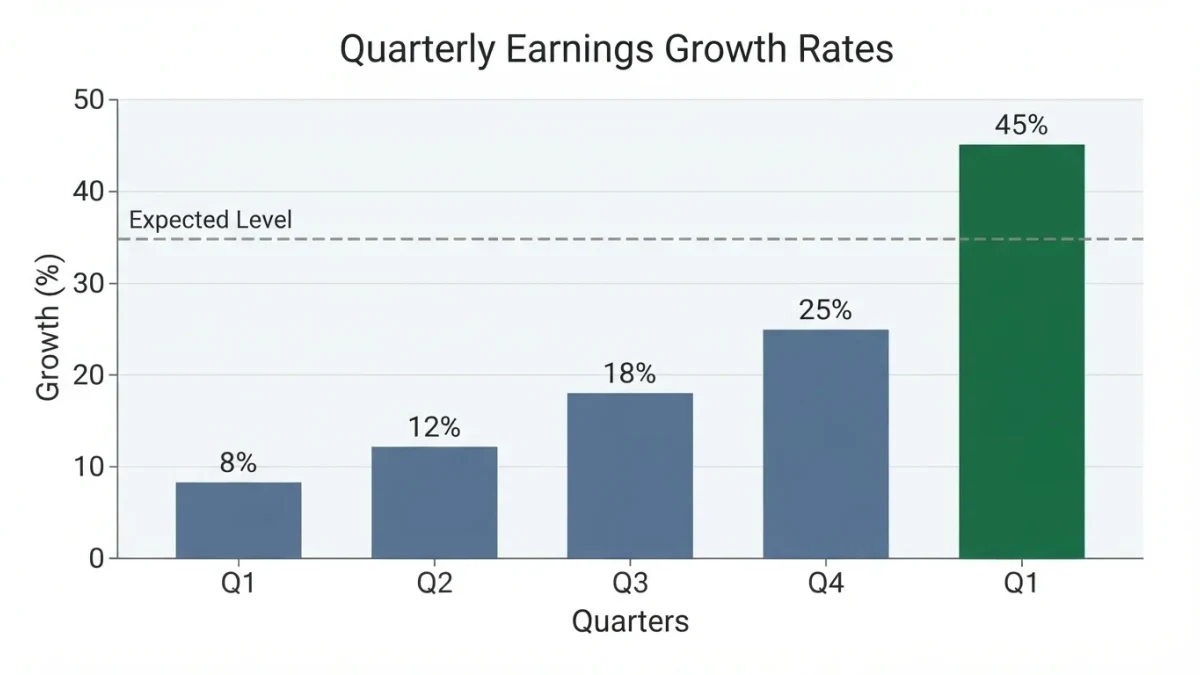
That pattern is worth more attention than the usual preview framing, because it says something about how the market prices Columbia heading into the print. This quarter, the consensus expects revenue to grow 18.9 percent year on year, roughly matching the 18 percent increase the company recorded in the same quarter last year. Analysts have generally reconfirmed their estimates over the past 30 days, which suggests the Street expects the business to stay the course. But Columbia has missed Wall Street's revenue estimates multiple times over the last two years. A reconfirmed estimate is not the same as a credible one.
What does the estimate history actually tell us?
Two years of repeated revenue misses point to a forecasting gap, and the gap can run in either direction. Either analysts have consistently overestimated what Columbia's balance sheet can produce, or the company has consistently under-delivered against its own trajectory. The supplied evidence does not settle that, and it would be wrong to pretend otherwise. What it does settle is the practical point: the consensus number for Columbia has been an unreliable anchor, so an 18.9 percent growth expectation should be read as a rough sketch, not a promise.
For readers building a watch list, the useful discipline is to treat the print as a test of the estimate itself. If Columbia beats, the miss pattern was pessimism correcting. If it misses again, the pattern was structural, and the reconfirmed estimates over the last 30 days will have told investors nothing. Either outcome is informative in a way a single quarter's growth rate is not. Our guide on How to Prepare for Earnings Season as an Investor makes the same broader point: the setup matters as much as the result.
What do the regional-bank peers signal?
A handful of Columbia's regional-bank peers have already reported, and the early reads point in opposite directions. QCR Holdings' revenues fell 11.7 percent year on year and missed analysts' expectations by 8.9 percent. Washington Trust Bancorp, by contrast, reported revenues up 15 percent, topping estimates by 4.1 percent — and its shares traded up 4.2 percent after the results.
The lesson from that pair is not that regional banking is fine or broken. It is that the market is rewarding clean beats in this segment, not merely growth. Washington Trust grew more slowly than Columbia did last quarter and got a positive stock reaction, because it cleared its number. Columbia grew 33.2 percent and presumably did not. In a group where share prices are down 3 percent on average over the last month, per the preview, the penalty for another miss is likely to be sharper than usual.
How is the stock priced heading into the print?
Columbia shares are down 2.8 percent over the last month, slightly better than the regional-bank group average of down 3 percent. The average analyst price target sits at $33.33 against a current share price of $29.07, according to the TradingView preview. That gap implies analysts see upside — but it is the same analyst community whose revenue estimates Columbia has repeatedly missed, so the target deserves the same skepticism as the estimate.
Investors weighing how much weight to put on consensus figures ahead of a report may find our piece on Why Does Guidance Move Stocks More Than the Earnings Beat Itself? useful context, along with our broader earnings coverage and the analysis hub. Readers following this should also see Why Does Guidance Move Stocks More Than the Earnings Beat Itself?.
What to watch when the numbers land
Three things, all drawn from the record already on the table. First, revenue against the 18.9 percent growth consensus — the line Columbia has failed to clear repeatedly. Second, net interest income, which it missed last quarter and which is the engine of a bank's earnings. Third, tangible book value per share, which came in line last time; holding that line while revenue wobbles would at least show the balance sheet is steady even when the top line is not.
The restrained lesson here is about reading previews honestly. The headline facts — Thursday after close, 18.9 percent expected growth, a $33.33 price target — look routine. The two-year miss pattern underneath them is the actual story, and it is the part most coverage skips. Whether Thursday resolves it or extends it, the estimate history, not the growth rate, is what the print will be judged against.