The Federal Reserve's annual stress test results, released June 24, 2026, confirmed that the thirty-two large banks subject to the exercise could absorb nearly 708 billion dollars in hypothetical losses under a severe recession scenario while staying above minimum capital requirements, per the Fed's published report. Every tested institution passed. Market Today publishes information, not investment advice; this is a factual account of the results and what changed around them.
What did the 2026 test show?
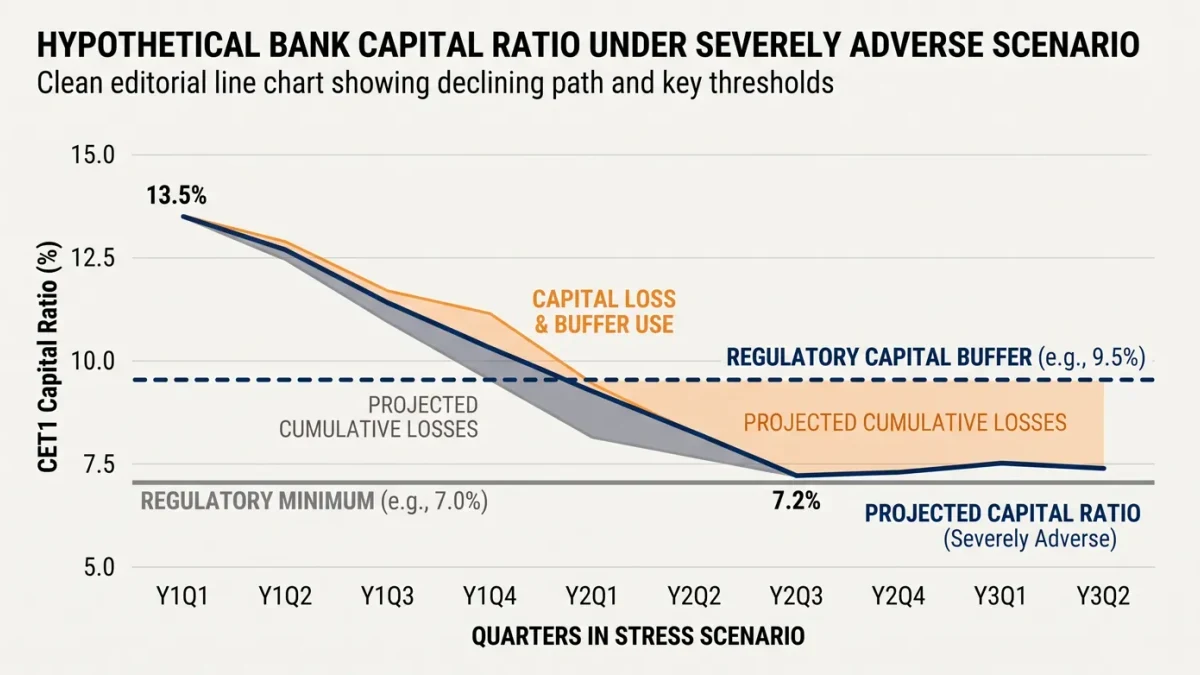
Aggregate resilience under a deliberately harsh hypothetical: severe global recession, rising unemployment, falling asset prices, and lending losses concentrated in credit cards and commercial real estate, per the scenario documentation. The thirty-two banks' aggregate capital ratios declined under stress but remained above required minimums throughout the projection horizon — the test's design standard. Analysis of the results noted a framework in transition: the Fed implemented changes including averaging of results across scenarios, and the largest banks' weighted average peak-to-trough decline in their common equity tier one capital ratio ticked up roughly a tenth of a percentage point versus the prior year's methodology, per published analyses of the release.
Why do passes translate into payouts?
Because the stress test anchors each bank's stress capital buffer — the add-on to minimum capital requirements that ranges with the firm's projected losses. Easier results mechanically produce lower buffers, and lower buffers release capital for dividends and buybacks; rating-agency commentary on the 2026 results explicitly connected the comfortable passes to increased capital distributions. The sequence that follows is fixed by rule: banks file capital plans after results, and the new requirements take effect at the start of the fourth quarter. For market readers, stress-test week is therefore a capital-planning event as much as a solvency check — the dividend and buyback implications print in the days after the release.
What context did the coverage skip?
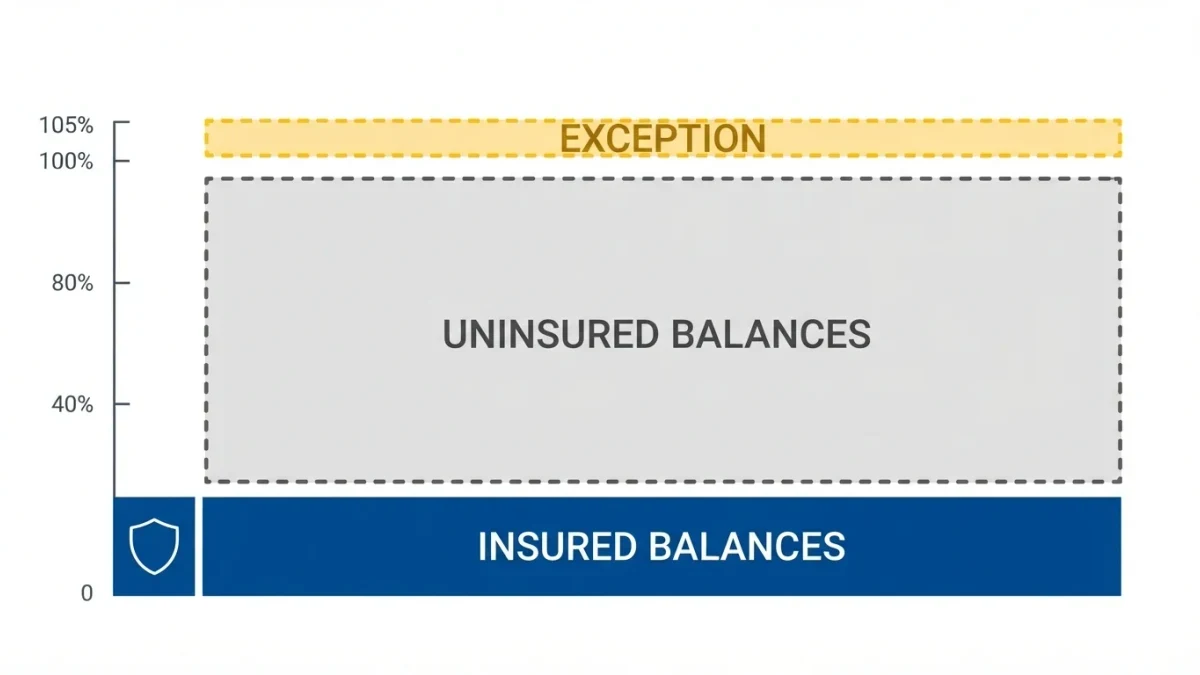
Two threads deserve more attention. First, the framework debate: the 2026 exercise ran under revised methodology — scenario averaging and related changes — that industry groups had sought for years and that critics argue softens the year-to-year volatility of requirements in both directions; the transition means 2026 results are not directly comparable to 2025's, a caveat several analyses flagged and some headlines did not. Second, what the test does not cover: the scenario is the Fed's choice, the horizon is nine quarters, and the exercise measures regulatory capital rather than liquidity under a funding run. The 2023 regional-bank failures — silicon-laden balance sheets, unrealized securities losses, deposit flight — were a liquidity and interest-rate event that the capital-centric framework caught only glancingly, a lesson the Fed's own reviews acknowledged and that motivates the separate liquidity tools readers should not conflate with DFAST passes.
What happens next, factually?
The Fed's report, the scenario documentation, and each bank's results are public on the Federal Reserve's site; banks announce updated dividend and repurchase intentions in their capital-plan disclosures over the following weeks, and the new buffers take effect October 1. Readers verifying this account should read the release directly — the sixty-plus pages of firm-by-firm numbers are the substance beneath every headline.