During the March 2023 banking stress, banks borrowed a record one-hundred-fifty-plus billion dollars from the Federal Reserve's discount window in a single week, per Fed data — the largest use of the central bank's standing lending facility in its history, and the proof of a paradox regulators have spent a decade trying to solve: the window always works, and banks are always afraid to be seen at it. Market Today publishes information, not investment advice, and this explainer covers the oldest tool in central banking and its oldest problem.
What is the discount window?
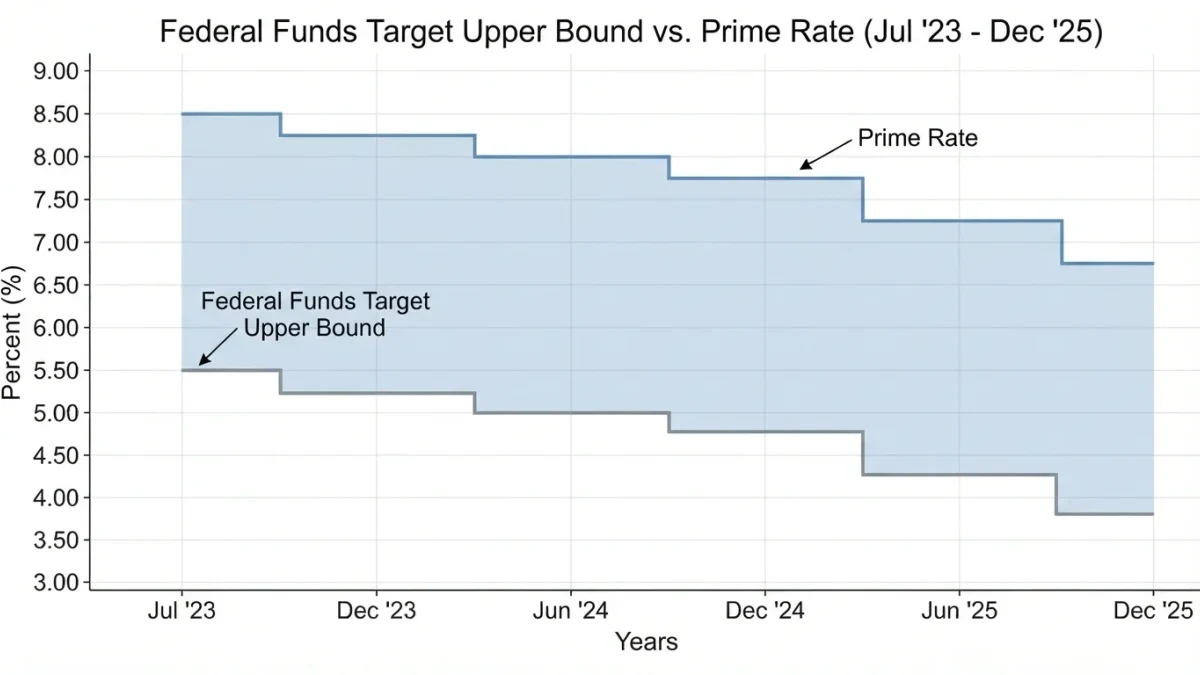
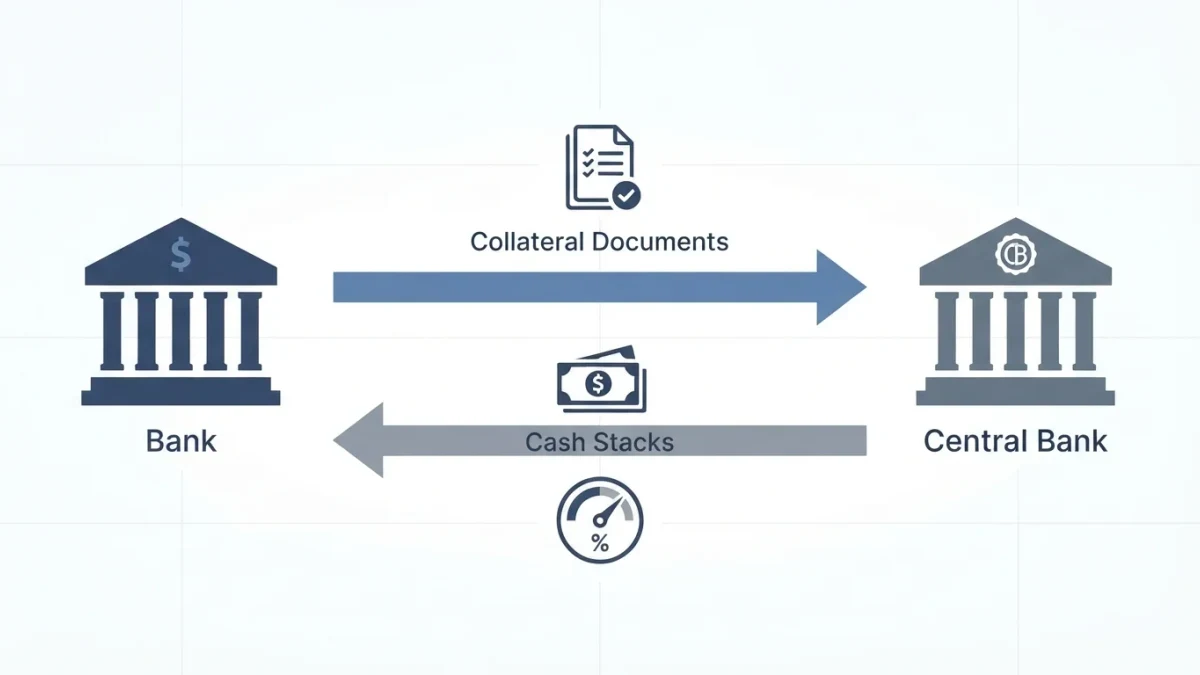
The Federal Reserve's standing facility for lending to commercial banks, against collateral, at a rate set above the policy target — the modern descendant of the lender-of-last-resort function central banks have performed since the nineteenth century. Banks in temporary need of funds can pledge loans or securities and borrow from their district Fed, ordinarily overnight, at the primary credit rate (set at the top of the target range in normal times, per the Fed's current framework). The design principle is Bagehot's classical rule, updated: lend freely, at a penalty rate, against good collateral — freely so that solvent institutions never need to fail for want of cash; at a penalty so the facility is a backstop, not a subsidy; against collateral so the central bank takes no credit risk it cannot verify. The Fed operates the window through its twelve district banks, a structural fact that shapes both its operation and its image.
Why is there a stigma problem?
Because borrowing announces what markets infer from it. The window's paper trail is visible — to examiners, to the Fed, eventually in aggregate data — and a bank seen borrowing can be presumed desperate, since a healthy bank could supposedly raise funds in private markets. The fear is self-fulfilling: if counterparties treat window use as a distress signal, then even signal-free borrowing becomes costly, so banks refuse the window precisely when using it would be prudent, and the facility idles while stress builds. The paradox has deep historical roots — pre-2008, banks went to extraordinary lengths, including paying well above the window's rate in markets, to avoid the discount taint, a pattern the Fed's own research documented. Stigma is the reason an always-open facility was almost never used in 2008's early weeks, and the reason the Fed opened emergency facilities with different names — the alphabet soup of that crisis — so banks could borrow without the label — a workaround that solved the branding problem while confirming it.
The stigma economics are worth one more step: a borrowing bank's cost is not the penalty rate itself, which is modest, but the inference markets draw — a shadow price that can dwarf the official one. Rational banks therefore treat the window as disaster insurance, held but unused, and the system pays for that restraint in stress-test-style scenarios where an early, quiet borrowing would have prevented a loud one.
What changed after each crisis?
A running battle between redesign and reluctance. After 2008: the Fed created term-auction lending to disguise window access, cut the primary credit rate's penalty to a token spread, lengthened terms, and broadened collateral — then watched banks avoid it anyway. After March 2020's dash for cash: the Fed encouraged window use publicly and in supervisory guidance, telling banks that borrowing was a sign of planning, not weakness. After March 2023: the paradox resolved itself under duress — with Silicon Valley Bank's failure showing what deposit runs do, banks borrowed the record sums noted above, and regulators doubled down on normalization: new guidance telling supervisors to treat window borrowing as neutral, pre-positioning programs that banks pre-pledge collateral so future borrowing is operationally instant, and standing-repo-style mechanics at the window. The 2023 episode's clean lesson: when the alternative is visibly failure, stigma evaporates — the goal of policy is to make the window usable before that point.
How does the window fit the Fed's plumbing stack?
As the ceiling-side complement to the floor system this publication's rate-setting explainer covered. The interest paid on reserves and the overnight reverse repo facility pin the market's rate from below; the discount window and the Standing Repo Facility cap it from above — a bank facing a funding squeeze can borrow at the window's rate rather than bid the market's rate to the sky. In calm times the caps are unused and invisible; in stress they are the difference between a rate blip and a funding spiral. The window also serves the collateral-constrained institutions the repo facility cannot: smaller banks without primary-dealer access, and any bank whose assets fit the window's broader collateral rules. The 2023 numbers proved the architecture's capacity; the pre-positioning programs since are an attempt to prove its speed before the next test.
What are the honest criticisms?
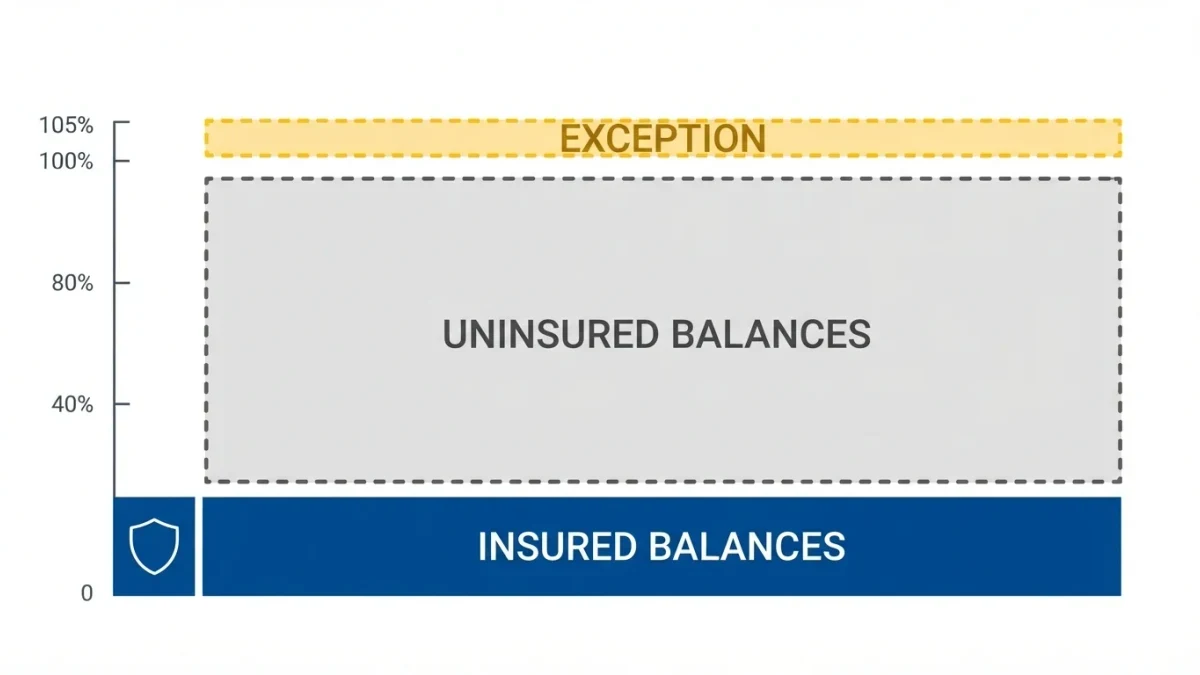
Three with substance. Moral hazard: a cheap, certain backstop may invite riskier balance sheets — the Bagehot penalty-rate principle exists precisely to price this, and every spread reduction trades safety-incentives for usability. The secrecy tension: disclosure lags and aggregation protect borrowers from stigma but shield the policy process from scrutiny — post-2008 and post-2023 facility disclosures arrived only after legal and journalistic pressure, a tension between bank stability and democratic accountability that has no clean resolution. And distributional questions: emergency facilities in 2008 and 2020 reached financial institutions first and fastest, a sequencing critics across the political spectrum have noted, while the 2023 facilities protected uninsured depositors outright — decisions that were arguably necessary and were made by technocrats with limited ex-ante rules, which is the standing governance critique of the modern Fed.
How did other countries solve the same problem?
Comparisons sharpen the diagnosis. The European Central Bank's equivalent — regular liquidity operations in which hundreds of banks participate weekly — built routine use into the system's design: borrowing is the norm, not a signal, because everyone does it constantly. The Bank of England's indexed long-term repo operations similarly make standing facilities ordinary plumbing. The American design — abundant reserves, a market-first funding culture, and a window reserved for embarrassment — produces the opposite equilibrium. The Federal Reserve's pre-positioning push is, read honestly, an attempt to import the European normal: make the mechanics so rehearsed that use becomes administrative rather than confessional. Whether culture follows procedure is the experiment's open question, and the weekly data grades it.
What should market readers watch?
The Fed's weekly balance-sheet data — the H.4.1 — reports discount-window and related lending every Thursday, and the series is the cleanest weekly stress gauge the system publishes: near-zero in calm, a spike in funding strain, with the caveat that stigma suppresses exactly the early readings readers want. The pre-positioning statistics — collateral already pledged for future use — publish alongside, and their growth is the best measure of whether the anti-stigma campaign is working in peacetime. A reader who follows the two series learns the system's posture: preparedness rising quietly, usage arriving loudly, and the gap between them — the stigma premium — visible in the difference.
Readers should also grade the report card against the 2023 benchmark: the record week proved the window's capacity in acute stress, but the policy goal is broader — usage that arrives before the acute stage. Weekly borrowing that rises gently during ordinary quarter-end funding pressure would be the strongest sign the campaign has worked; its continued absence, while capacity sits ready, is the stigma premium persisting in peacetime.
Where can readers verify everything?
The Fed's site publishes the window's rates, collateral rules, and supervisory guidance; the H.4.1's lending lines update weekly; the post-2023 pre-positioning programs are documented in Fed releases. The claims above trace to those public documents — fittingly, since the window's whole story is about what becomes visible when, and the reader's advantage lies in watching the official numbers rather than waiting for the narrative.